EU Solar Workforce to Shrink 12% by 2030, Industry Data Shows
The EU solar workforce is projected to shrink 12% by 2030 as deployment growth stalls, shifting the sector from expansion hiring to a replacement labour market.
Updated
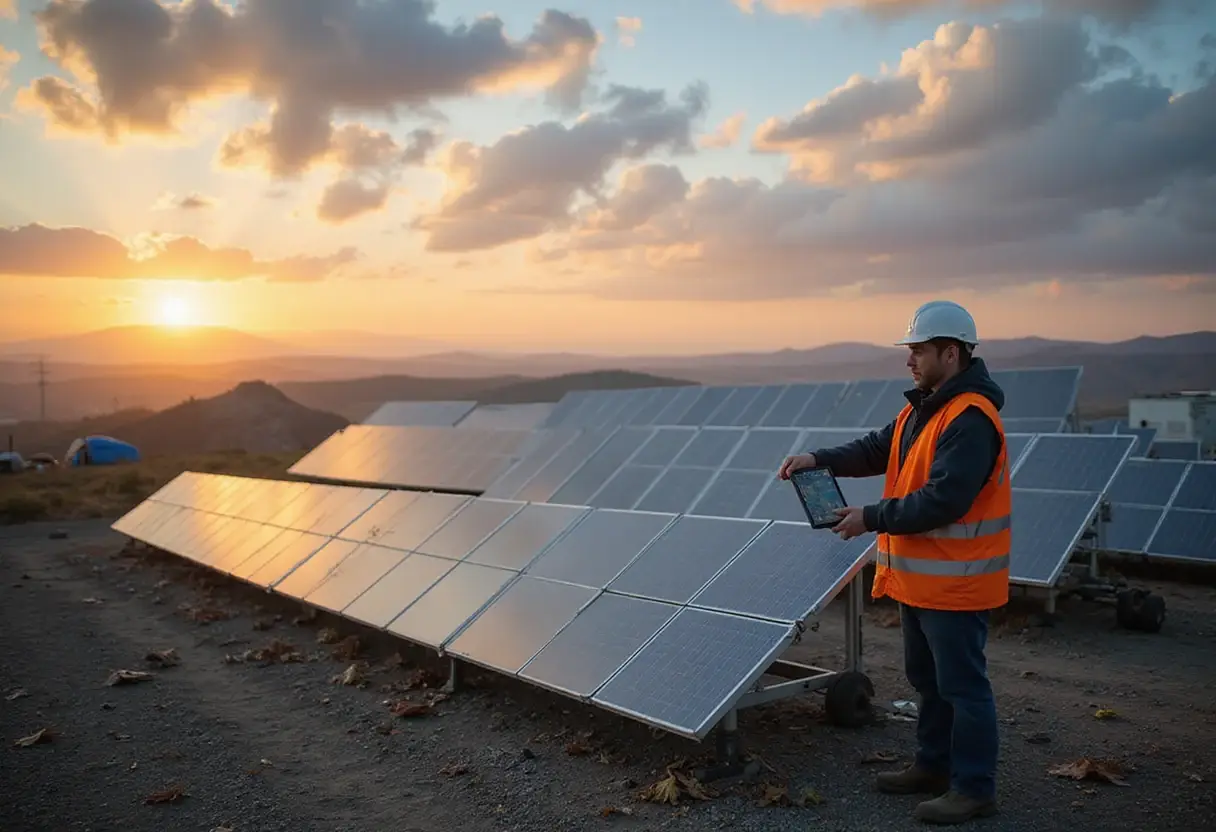
The European Union's solar workforce is on track to contract by 12% by 2030, according to industry projections reported by PV Tech, as deployment growth stalls across the bloc.
The forecast marks a sharp reversal for a sector that has spent much of the past decade expanding headcount. After years in which solar installation targets drove aggressive hiring across engineering, project development and field services, the pipeline of new capacity is no longer growing fast enough to sustain current employment levels.
What is driving the projected decline?
PV Tech attributes the coming contraction to stalled deployment growth rather than automation or offshoring. In practice, that means the volume of new solar capacity being commissioned across EU member states is flattening, which directly reduces demand for installation crews, project managers and operations staff.
For workers in the sector, the mechanism is straightforward: solar employment tracks the annual build-out. When megawatts added per year stop rising, hiring slows first, followed by net job losses as maintenance-heavy but labour-light operating portfolios replace construction activity.
How the jobs picture splits by role
A 12% headline figure will not fall evenly across the value chain. Historically, deployment-linked roles — installers, site technicians, construction supervisors — are the most exposed when annual capacity additions plateau. Roles tied to operations, maintenance and repowering of existing assets tend to be more resilient, because the installed base keeps growing even as new-build slows.
For an individual considering a move into solar, the calculus has shifted. The sector is moving from an expansion labour market, where volume created abundant entry-level openings, toward a replacement market where hiring happens mainly as workers exit or as projects in the existing fleet need servicing.
The national picture
The projection covers the EU as a whole, and member states will diverge. Markets with mature solar fleets and saturated deployment pipelines face the steepest employment risk, while those still building out capacity may see slower growth rather than outright contraction.
The 2030 horizon matters. It aligns with the endpoint of the EU's current climate and energy framework, meaning the jobs figure will serve as a benchmark for how the bloc's decarbonisation strategy translates into labour-market outcomes.
What to watch next
Revisions to deployment forecasts — whether from policy changes, permitting reform or electricity-market conditions — will move the employment number in either direction. If EU installation rates recover before 2030, the projected 12% decline would narrow accordingly.
Source: Google News: Jobs report
More from Priya Raman
Show full bio
Market editor covering people, launches and day-to-day practice in Job market data and labor economics at Path & Pay.
540 articles
Go deeper
- Solar and Storage Employed Nearly 1 Million People Across the EU in 2025
- European Solar Plus Storage Employment Nears Peak, Decline Seen by 2030
- Data Center Boom Could Add 120,000 Illinois Jobs — Mostly Temporary
- Data Center Boom Could Add 120,000-Plus Illinois Jobs, Report Finds
- China's Solar Layoffs Hit 222,800: Roles That Are Surviving