German Industry Has Shed Nearly Half a Million Jobs Since 2019
German industry has lost nearly half a million jobs since 2019, Ifo data show — close to 100,000 positions per year, and the trajectory, not the total, is what matters now.
Updated
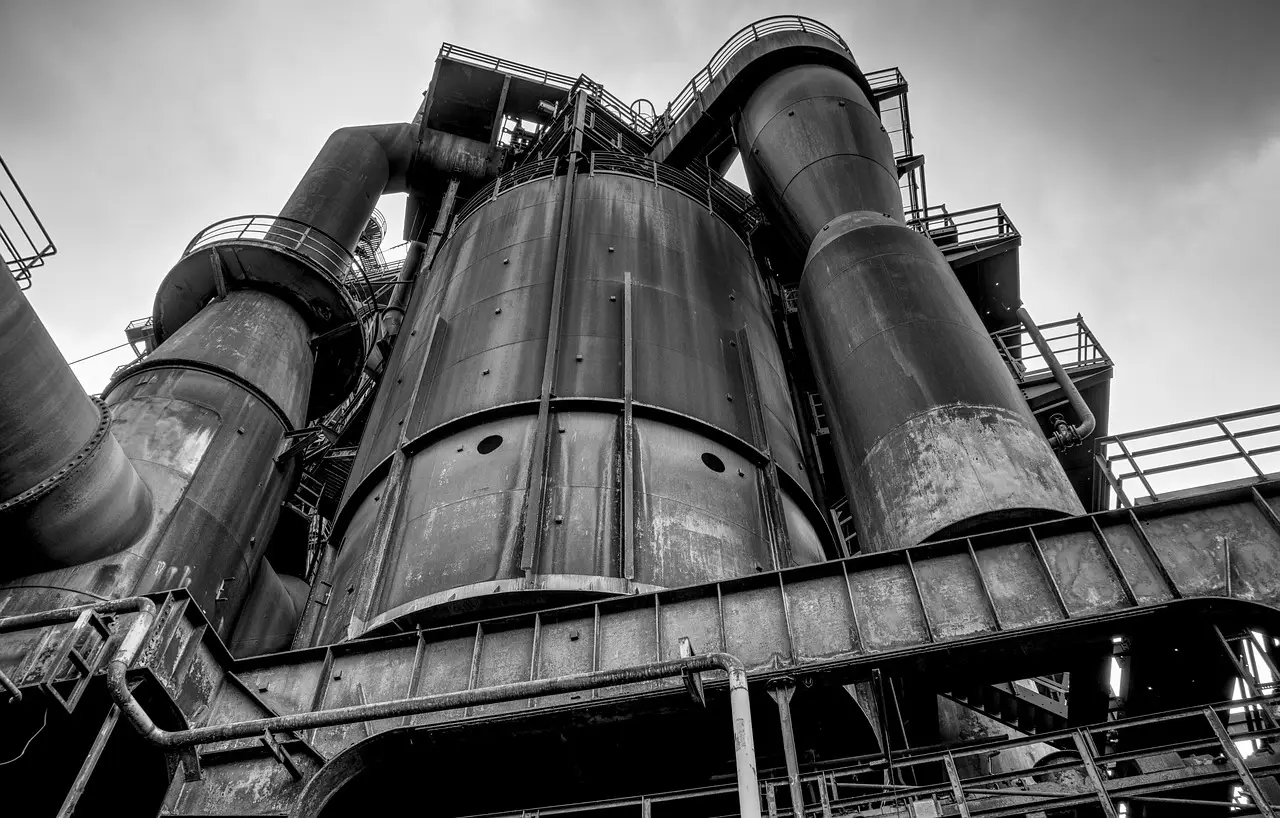
German industry has lost nearly half a million jobs since 2019, according to the Ifo Institute, a cumulative decline that marks one of the sharpest sustained contractions in the country's post-war manufacturing base.
The figure, reported by Reuters on the basis of Ifo's research, covers the period from 2019 to the present. It reflects employment losses across German industry as a whole, not a single sector or company.
To put the number in perspective: half a million positions is roughly equivalent to the entire workforce of a mid-sized German industrial city. Spread across roughly five years, the losses average close to 100,000 jobs per year.
What does the data actually show?
The Ifo Institute, one of Germany's leading economic research bodies and the publisher of the country's most closely watched business-climate index, compiled the employment figures. The tally of nearly 500,000 lost industrial jobs since 2019 captures the combined effect of:
- the manufacturing slowdown that preceded the pandemic;
- the energy-price shock that followed Russia's invasion of Ukraine in 2022;
- weak export demand, particularly from key trading partners.
The report is aggregate. What it does not say — and what matters for any individual reader — is how the losses are distributed by region, company size, or occupation. Aggregate national figures of this kind routinely conceal wide variation: some industrial branches and locations contract sharply while others remain short of skilled labor.
The data also do not distinguish between layoffs, attrition, and non-renewal of fixed-term contracts. Each of those has a different implication for how difficult re-entry into the labor market will be for the workers affected.
What does this mean for your market position?
For engineers, technicians, and skilled production workers in Germany, the aggregate trend signals a thinner industrial jobs market than at any point since the euro-zone debt crisis era. A candidate searching in 2024 or 2025 is competing in a pool that has absorbed close to half a million former industrial employees over five years.
That is not uniformly bad news for individuals — displaced industrial labor does not vanish from the economy, and retraining pathways exist — but the Ifo figure is a reminder that sector loyalty carries measurable risk. Workers whose skills transfer to logistics, maintenance for energy infrastructure, or advanced manufacturing niches retain stronger leverage than those tied to contracting export branches.
What is not said
Ifo's headline number invites an obvious follow-up question the report does not answer: has the loss stabilized, or is it still accelerating? A cumulative figure since 2019 cannot distinguish between a front-loaded shock and an ongoing bleed. Any reader using this data to time a career decision should treat the trajectory, not the total, as the decisive variable.
Reuters' report likewise gives no counterfactual — how many industrial jobs Germany would have shed under normal recession-and-recovery cycles. Some portion of the losses reflects cyclical, potentially reversible, forces rather than structural decline.
Ifo publishes its business-climate and employment indicators monthly and revises them as new survey rounds arrive; the near-half-million figure should be read as an estimate subject to revision, not a final accounting.
The forward question for Germany's labor market is whether industrial employment has found a floor — and on that, the next several Ifo readings, not this cumulative tally, will carry the evidence.
Source: Google News: Job market
More from Sophie Lindqvist
Show full bio
Staff writer covering regulation, policy and their impact on Job market data and labor economics at Path & Pay.
507 articles
Go deeper
- German Industry Study Warns of Rapid Job Losses Ahead
- Job Loss in Germany's Carbon-Intensive Sectors Carries a Heavy Price
- German Employment Falls Again: Unemployment Rate Hits 4.0%
- VW Cuts 50,000 Jobs as Germany's Graduate Pipeline Hits 527,600
- 2.1 Million US Manufacturing Jobs Could Sit Unfilled by 2030