No AI Jobpocalypse Yet — But AI Job Postings Doubled in a Year
AI mentions in US job postings doubled to 7.2% in a year, yet productivity growth stays at trend and worker sentiment on AI has collapsed to 45% positive.
The Indeed AI Tracker doubled in one year, rising from 3.6% of US job postings in September 2025 to 7.2% in September 2026 — yet there is still no evidence of mass AI-driven job losses. That's the central finding of Indeed and Glassdoor's 2027 US Hiring and Worklife trends report, which portrays a labor market being reshaped slowly rather than destroyed quickly.
The tracker measures the share of Indeed postings containing AI terms, a proxy for AI labor demand. The share of companies with at least one AI-mentioning posting rose 44% over the same period, to 7.6%. Glassdoor reviews mentioning AI more than doubled. Weekly personal AI use climbed from 44% to 53% of employed workers, per the 2026 Indeed Hiring Lab Workforce Insights Survey (WIS), while regular workplace use rose from 36% to 42%. Takeaway: AI demand is spreading fast, but the damage hasn't shown up in headcounts.
Is AI still just a tech-sector story?
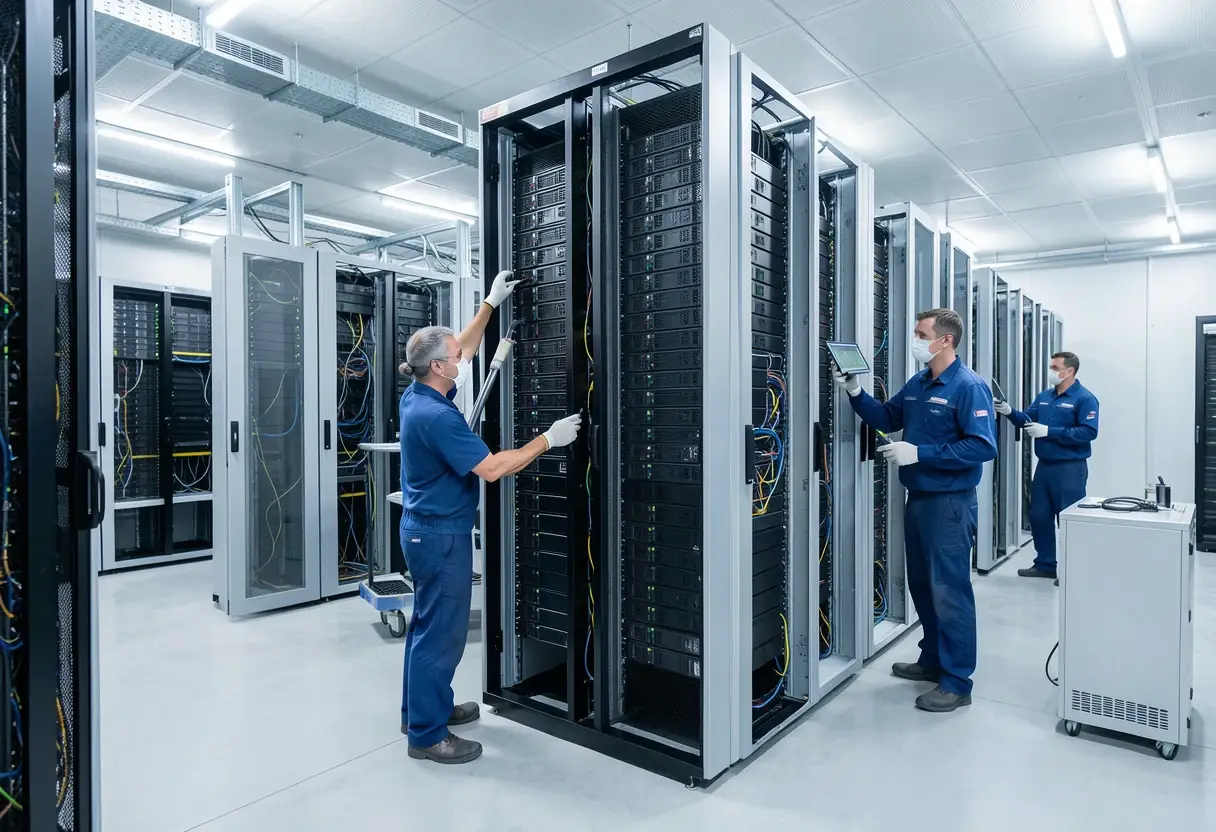
No. Nearly two-thirds of "AI-touched" job titles — postings with AI in the job title itself — now sit outside traditional tech occupations. Employers are adding AI to titles for truck drivers, retail sales associates and physical therapists. The data center build-out is pulling in skilled trades too: a quarter of data center-related postings in the first half of 2026 targeted installation and maintenance workers, with advertised wages 42% higher than similar non-data-center roles.
Demand is also rebounding in the roles genAI (generative AI) can handle best. Of the recent increase in Software Development postings, 71% were senior roles and 37% explicitly mentioned AI in the title. From September 2025 to September 2026, postings rose most in highly AI-exposed categories — software development up about 19% — while childcare, driving, dental and education fell 10% to 14%. Employers aren't shedding workers; they're repricing skills.
Has AI delivered a productivity boom?
Not yet. US labor productivity has grown at a 2.1% annualized rate since late 2019, per the Bureau of Labor Statistics — above the 1.5% pace of 2008-2019 but in line with the post-1947 average. Firm-level adoption lags individual use: 31% of WIS respondents called their employer's AI adoption low-to-zero, versus 25% reporting high adoption.
The gains may also be thinning. A 56% majority of employed US respondents disagreed that AI makes them more efficient. Among regular workplace users, estimated daily time savings slipped from 2.3 to 2.1 hours over the past year. Takeaway: the productivity wave, if it comes, hasn't landed.
Why are workers turning against AI?
Sentiment has flipped. In 2019, 82% of Glassdoor reviews mentioning AI framed it positively; by 2026, only 45% did, and 51% of AI mentions appear only in the "cons" section. Workers were 2.6x more likely to mention AI in September 2026 than a year earlier.
The negativity tracks anxiety, not just exposure. AI-critical reviewers were 3.5x more likely to mention burnout, 3.8x more likely to mention job insecurity and 7.1x more likely to mention layoffs. One in five AI-critical reviewers explicitly mentioned layoffs. Only 37% of them approved of their CEO, versus 89% of AI-positive reviewers — gaps that hold even after controlling for star ratings. One reviewer's complaint: a "big push for use of AI tools that have provided little value." Notably, sentiment shows no strong link to measured AI exposure — even insurance adjusters' grievances aren't purely about displacement.
What should employers and job seekers do?
The report splits the shifts into cyclical ones, like the infrastructure hiring boom, and structural ones that will remake jobs slowly and painfully. Job seekers should target skills that complement AI and the parts of their profession needing a human touch. Employers face a harder trade-off: a weak labor market has let them ignore worker AI concerns, but with large language models still needing a human in the loop, retention risk builds the moment the market turns.
Original: data.indeed.com
More from Tom Whitfield
Show full bio
Senior reporter covering regulation, policy and their impact on Job market data and labor economics at Path & Pay.
591 articles
Go deeper
- Software Development Job Postings Jump 23.8% as US Tech Hiring Rebounds
- Indeed Hiring Lab Releases US Labor Market Snapshot for May 2026
- AI Job Postings Rise While US Hiring Stalls, Indeed Finds
- Manufacturing Job Postings Jump 14.1% as B2B Hiring Market Turns a Corner
- Revelio Labs: 56.9k US Jobs Added in September, AI Adoption Slows