One-Third of College Time Should Go to AI, Economist Says
Economist Daniel Susskind says one-third of college time should go to learning AI, and that coding is no longer a safe career bet. His book urges durable skills over job-picking.
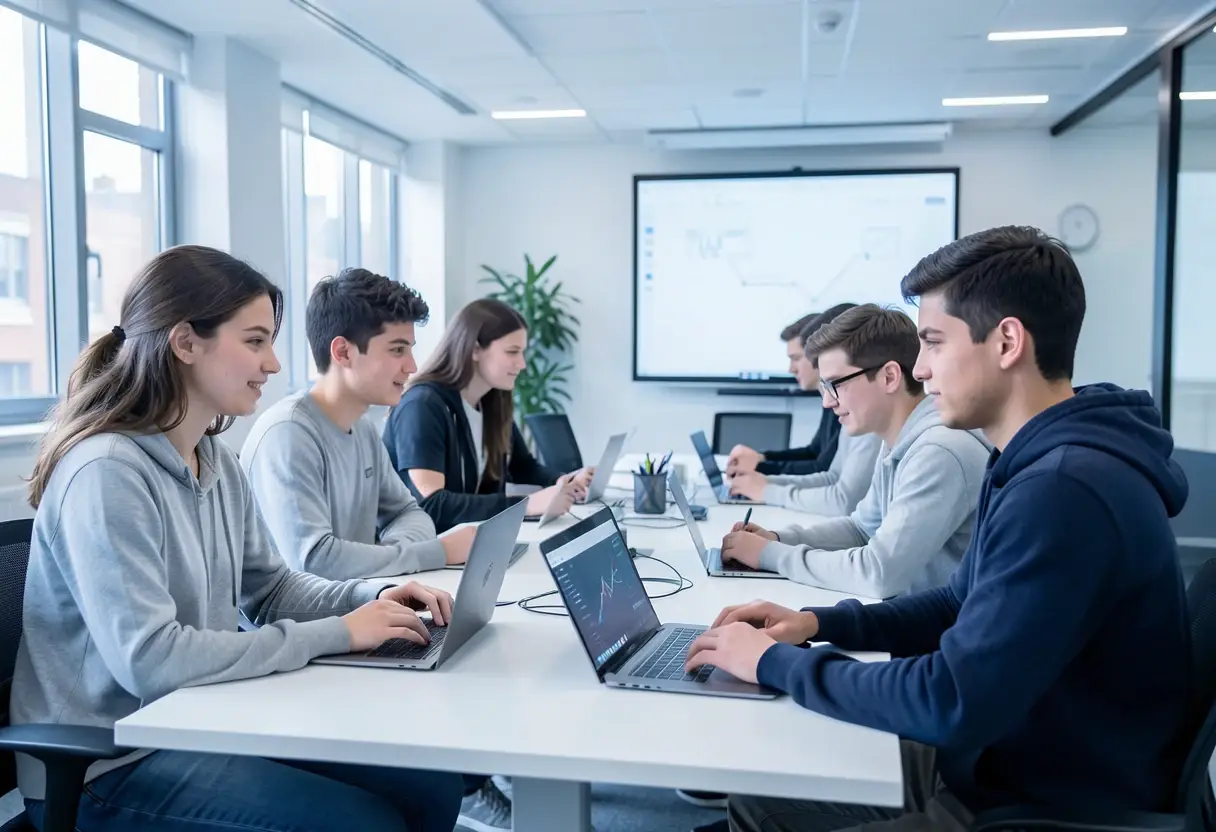
One third of a student's time at college and university should go to learning about AI and how to use it, according to economist Daniel Susskind of King's College London, a senior research associate at Oxford's Institute for Ethics in AI, in his new book "What Should My Children Do: A Human's Guide to the Age of AI."
His argument opens with an admission that cuts against most career advice: no one, including himself, can predict the future of work. At the dawn of the internet era, nobody anticipated that "search engine optimizer" or "social media manager" would become jobs. Most attempts to hedge against technological change are therefore fools' errands. Coding, long treated as the safe bet, is no longer a certainty.
What should parents actually do?
Susskind advises parents to focus on three basic skills, even if AI performs them better: literacy, numeracy — basic fluency with numbers and data — and critical thinking. His central worry is that AI removes the need to learn basic skills at all. Why learn math if AI can solve every problem? Because, he writes, losing these capacities would be "a disaster, leaving people unprepared for what lies ahead" — unlike memory loss, which began with the advent of writing.
His education strategy runs on two tracks, AI and non-AI. Students should learn to use AI to "stand on the shoulders" of the technology and do tasks that would otherwise be "unthinkable," but should also learn to "flourish without the technology," so basic skills do not die from disuse.
Which careers hold up?
Susskind concedes that AI is warping and ingesting white-collar work far faster than blue-collar work, yet he does not advise steering children into trades. His counterintuitive counsel for early-career white-collar audiences is to stay the course, because the future will likely feature more "domain experts" — experienced humans who know which problems need solving — paired with AI that solves them.
There are caveats. "It is crucial to move into a field because the underlying problems grip you, not the traditional job," he writes. Do not choose law for the image or the lifestyle; become a lawyer because you want to help people navigate the legal system. The problem lasts while the job changes in unpredictable ways.
He also warns of a status reshuffle. The most exposed roles are historically high-valued ones in which humans are "a means to achieve some end rather than an end in themselves" — lawyers, accountants, marketing experts. His advice: seek work where people genuinely want a human involved, whether for aesthetic, empathetic, or moral reasons, such as artists, nurses, judges, and carers.
How real is the disruption already?
The book arrives amid concrete tremors. In early October, OpenAI released 722 AI-generated mathematics papers claiming solutions or progress on hundreds of open problems. Mathematician Steven Strogatz, co-author of "Big Math," shed tears in an interview with The New York Times, asking what the point of discovery was if machines could out-discover humans.
Susskind's response to that uncertainty is structural: education should shift from building workplace competence toward cultivating character, moving moral questions into classrooms "in a structured way." The latest AI systems, he writes, already explain ideas and guide students better "than so many of the teachers I have watched in action over the years (and yes, I include myself in that group)."
Whether schools can rebuild curricula around a two-track model before the technology moves again is the question his book leaves open.
Source: feeds.businessinsider.com
More from Sophie Lindqvist
Show full bio
Staff writer covering regulation, policy and their impact on Job market data and labor economics at Path & Pay.
583 articles
Go deeper
- US Colleges Now Offer Degrees in Influencing and AI
- IMF Chief Warns AI May Close Entry-Level Jobs for Young Workers
- IMF Warns an AI 'Tsunami' Could Hit Young Workers Hardest
- Students Enter an AI-Reshaped Job Market, Glasgow Guardian Reports
- USC and UCLA Bet Big on AI to Meet Soaring Student, Job Market Demands