Singapore President Warns AI May Hit Entry-Level Jobs Hardest
Singapore President warns fresh graduates could be hit hardest by AI, as entry-level tasks overlap most with what generative tools already do well.
Updated
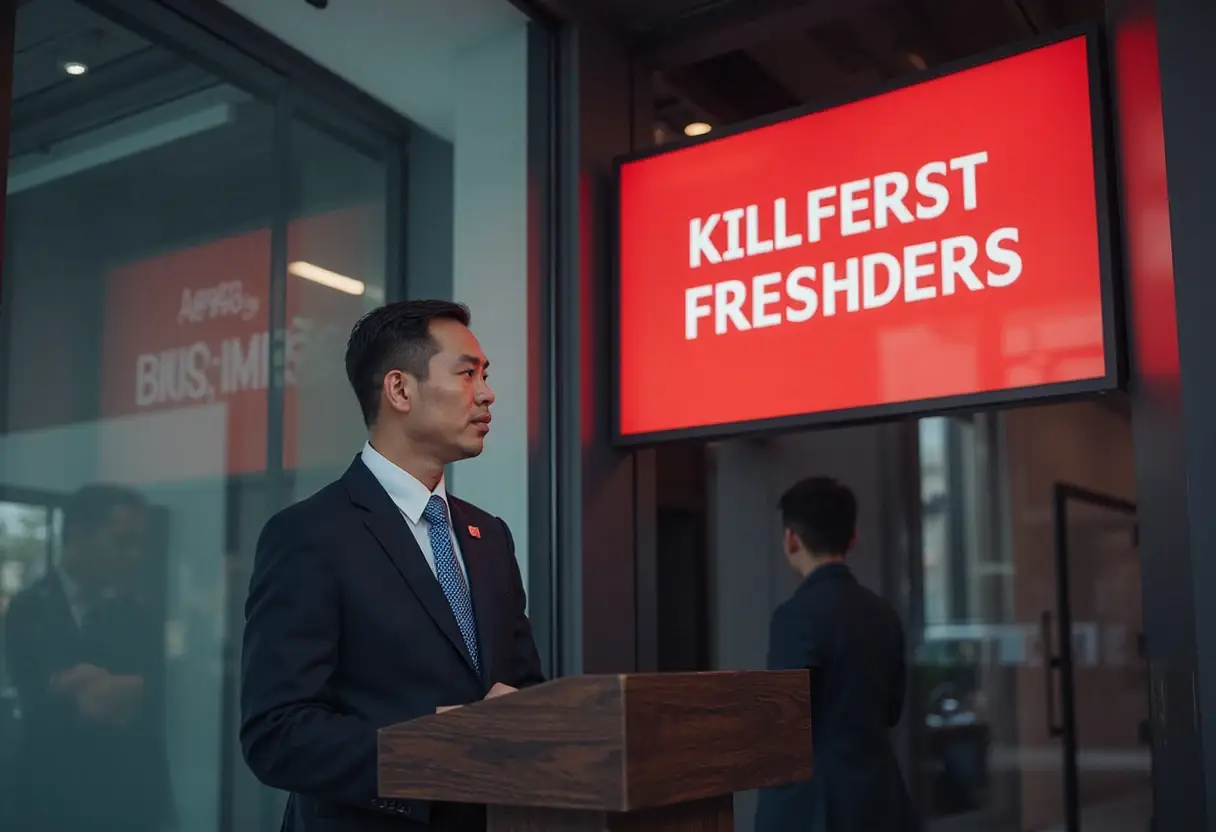
Singapore's President Tharman Shanmugaratnam has warned that fresh graduates could be the group hit hardest by artificial intelligence, as entry-level roles — long the first rung on the career ladder — become the most exposed to automation.
Speaking about the labor-market effects of AI, the Singapore President framed the concern around a specific and uncomfortable question: is AI killing the first job? His warning lands on freshers, the workers who depend most on junior positions to enter the workforce and build early experience.
Why entry-level roles are the exposure point
The concern rests on a structural feature of the modern labor market. Entry-level tasks — drafting, summarizing, basic analysis, routine customer communication — overlap heavily with what current generative AI tools already perform well. That overlap puts the traditional first job at risk before a graduate has accumulated the specialized skills that make senior workers harder to replace.
For national economies, the stakes are highest in graduate-heavy labor markets. Singapore, with a highly educated workforce and a services-driven economy, sits squarely in the category of countries where junior white-collar hiring is a central pipeline for talent.
What this means for individual job seekers
For a fresher entering the market now, the warning translates into a concrete strategic question: which entry-level skills still signal value when AI can execute the baseline task? The answer increasingly lies in demonstrating judgment, domain context and the ability to direct AI tools — the layer above execution — rather than competing with the tools on output volume.
Senior workers face a different calculation. Their roles absorb AI as an augmentation layer, and their market position depends on experience that automation cannot replicate. The disruption, as the President's warning makes clear, is concentrated at the bottom of the ladder, not the top.
A national signal, not just a local one
Singapore's government has consistently positioned itself as an early mover on AI policy and workforce retraining, which gives presidential-level commentary on this topic added weight. When the head of state of one of Asia's most advanced economies singles out fresh graduates as the most vulnerable cohort, it signals how quickly the entry-level job debate has moved from tech commentary into mainstream economic policy.
The warning follows a broader global conversation among policymakers and labor economists about whether AI compresses the junior tier of the labor market first — eliminating the roles through which workers historically gained the very experience that later protects them from automation.
For graduates and early-career workers, the practical implication is direct: the timeline for building durable, AI-resistant skills has shifted earlier, into the first years of a career, or even before it begins. Expect hiring patterns, retraining programs and graduate curricula in advanced economies to keep adjusting to that pressure as the technology spreads.
Source: Google News: Job market
More from Grace Kim
Show full bio
Correspondent covering money, funding and market shifts around Job market data and labor economics at Path & Pay.
503 articles