Azerbaijan Must Match Education to Labor Market – Deputy Minister
Azerbaijan's deputy education minister says graduate training must reconcile 10–15 year cycles with industry speed, backed by OECD-near math scores and AI Hub ties with PASHA and SOCAR.
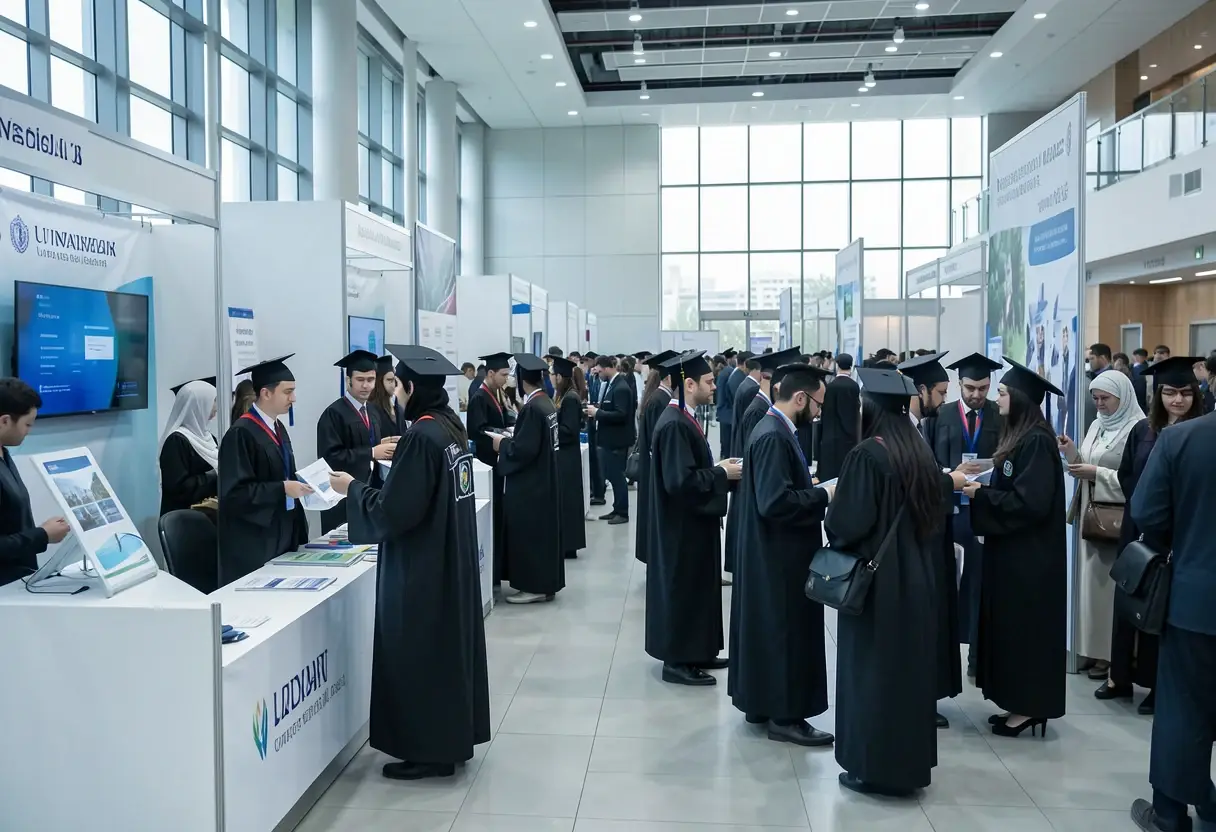
Azerbaijan has run a national education development strategy since 2013, and its deputy minister now says the system must align with labor market demand — or fall behind. Hasan Hasanli, Deputy Minister of Science and Education, made the case at the opening of the IE Leadership and Innovation Center in Baku on Tuesday, October 27, Trend's correspondent reported from the event.
The headline number in his argument: a 10–15 year gap. That's how long a traditional education cycle takes to produce a graduate, versus the fast pace industry now demands.
What did Hasanli actually say?
He framed the problem as a mismatch of speeds. AI is expanding the volume of information so quickly that education needs two tracks at once: traditional approaches for long-term development, and flexible models that respond to the economy's near-term needs.
"There is a difference between an approach that involves waiting 10–15 years to produce better graduates and the fast, flexible approach required by industry, companies and the economy. Under current conditions, it is important to reconcile these two approaches," the deputy minister said.
Takeaway: Azerbaijan's skills pipeline can't just be slow and thorough or fast and reactive — policy has to run both.
How strong is the evidence base?
Hasanli pointed to measurable gains. The 2013 strategy, approved by President Ilham Aliyev, improved both quality and accessibility of education, he said. Azerbaijan has also climbed in international assessments — particularly mathematics, a subject that feeds multiple industries. The country's performance has now approached the average levels of the OECD (the Organisation for Economic Co-operation and Development, the 38-member club of mostly advanced economies).
He stressed that sustained government effort is building a pool of talented young people. The next step, he argued, is systematically developing their knowledge and skills into future leaders, managers and professionals.
Takeaway: the government believes the raw talent pipeline exists; the bottleneck is converting it into job-ready specialists.
Which institutions carry the upgrade?
The deputy minister named the sector-level machinery. He cited the Baku Higher Oil School, the French-Azerbaijani University (UFAZ), the Azerbaijan-Türkiye University and dual-degree programs as key producers of highly qualified professionals.
Private-sector cooperation sits at the center. Hasanli singled out partnerships with PASHA Holding and SOCAR, Azerbaijan's state oil company, as particularly important.
"One of the main challenges is addressing the mismatch between labor market needs and the education system. Cooperation with the private sector makes it possible to identify these needs more accurately and acquire the relevant knowledge. The AI Hub platform was also established to ensure the continuity of this cooperation," he said.
Takeaway: companies, not ministries alone, are the mechanism for spotting which skills the market actually wants.
What comes next?
The steering committee met before the ceremony. It discussed initial projects run jointly with IE University and the Ministry of Economy, plus the work of the observatory and other initiatives.
Hasanli set the goal plainly: connect education's developed potential with the economy's real needs, accelerate the training of specialists in modern technologies, and expand Azerbaijan's innovation capacity. The IE Leadership and Innovation Center opened this week is the newest vehicle for that agenda.
Source: Google News: Labor market
More from Tom Whitfield
Show full bio
Senior reporter covering regulation, policy and their impact on Job market data and labor economics at Path & Pay.
543 articles