China Unveils Sweeping Higher Education Reform
China has unveiled a sweeping higher education reform aimed at universal university access, a shift with direct consequences for graduate labor-market competition and credential value.
Updated
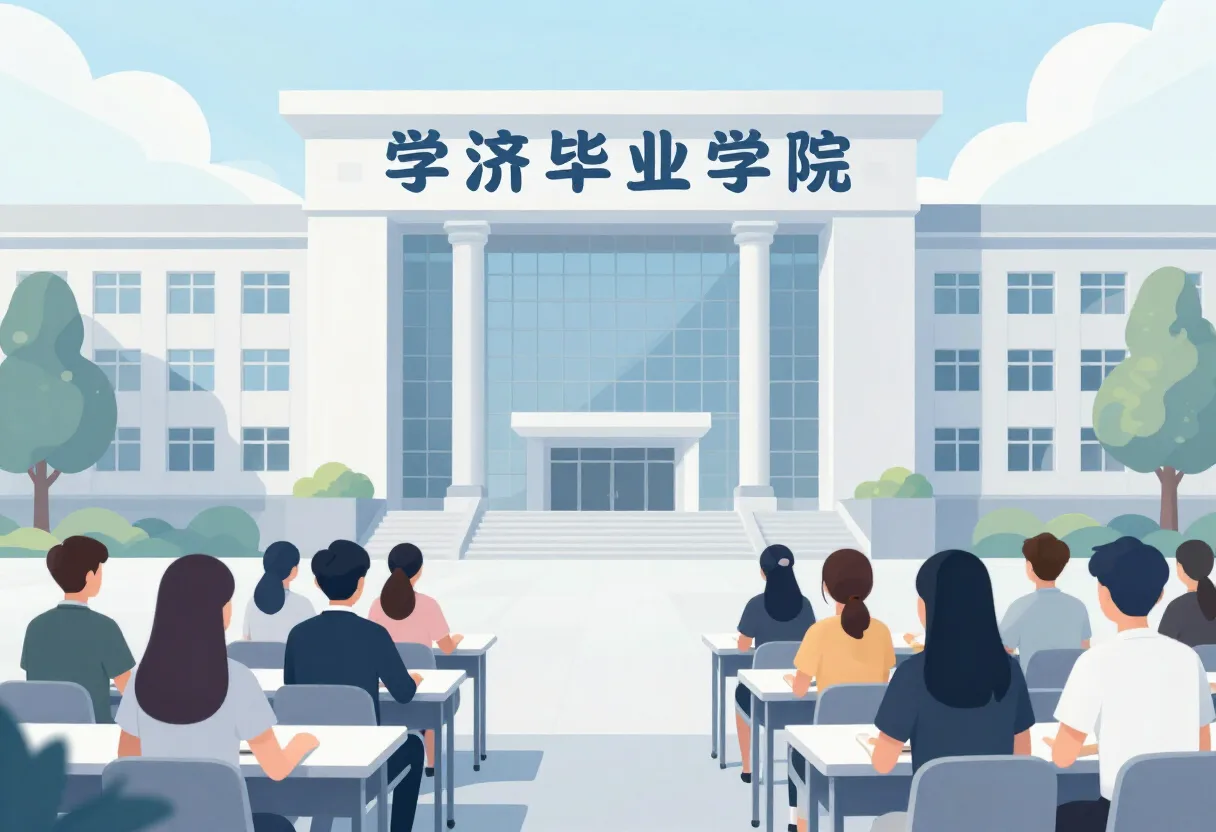
China has announced a comprehensive reform of its higher education system, with a stated goal that, in the words accompanying the rollout, "everyone can attend university." The announcement, reported by the South China Morning Post, marks one of the most expansive changes to Chinese tertiary education in recent years.
The framing of the reform is unambiguous. Rather than tightening admissions or rationing places, the policy sets universal access as its benchmark. That is a meaningful signal for how China intends to structure its talent pipeline — and for the millions of secondary-school graduates who each year face one of the world's most competitive university entrance processes, the gaokao.
What the announcement covers
The South China Morning Post describes the change as "sweeping," indicating that it reaches across the higher education system rather than targeting a single institution type or region. The headline objective — universal attendance — positions university education as a broadly available public good rather than a selective gateway.
For context on scale: China already operates the largest higher education system in the world by enrollment, with tens of millions of students across universities and vocational colleges. A reform explicitly premised on "everyone" attending extends that trajectory further, shifting policy emphasis from expansion of capacity to near-universal participation.
The report does not yet detail the specific implementation mechanisms — such as changes to admissions quotas, tuition structures, funding formulas, or the timing of phased rollout. Those operational details will determine how quickly the stated goal translates into actual seats and degrees.
Why it matters for workers and job seekers
For individuals in the Chinese labor market, universal university access cuts in two directions. It lowers the barrier to credentials for students who previously faced narrow admission odds. At the same time, it intensifies a dynamic already visible in China's economy: as degrees become commonplace, the wage premium attached to them compresses, and differentiation shifts toward field of study, institution quality, and skills.
China has in recent years grappled with a well-documented squeeze on graduate employment — record numbers of degree holders entering a labor market unable to absorb them at matching skill levels. A reform that multiplies graduates without a parallel shift in job creation would sharpen that mismatch. The South China Morning Post's report focuses on the education system itself; the labor-market consequences will depend on how hiring demand responds.
For employers, a broader graduate pool means a larger screening problem and, potentially, a recalibration of entry-level requirements. For students and families weighing educational investment, the calculus shifts from "can I get in" toward "what returns does my specific path deliver."
What to watch next
The critical follow-ups will be the implementation schedule, the funding commitments behind expanded access, and any accompanying changes to vocational education tracks, which China has simultaneously promoted as a parallel pathway. The South China Morning Post's reporting signals the direction of policy; the pace and mechanics remain to be spelled out in subsequent official documents.
Source: Google News: Job market
More from Daniel Okafor
Show full bio
News editor covering regulation, policy and their impact on Job market data and labor economics at Path & Pay.
476 articles
Go deeper
- China Unveils Higher Education Reform Pledged to Open Access
- China Reshapes Its Universities to Match Labor Market Demand
- China's New Graduates Face a Dire Job Market — and Now A.I. Too
- South Korean Students Are Delaying Graduation to Stay in the Job Race
- Foreign Degrees Lose Their Edge in China's Hiring Market