Kroger Cuts 3,000 Jobs, Citing AI and 'Duplicative Work'
Kroger announced 3,000 layoffs, saying it wants to 'reduce duplicative work' with AI. The company has not specified which roles, sites or timelines are affected.
Updated
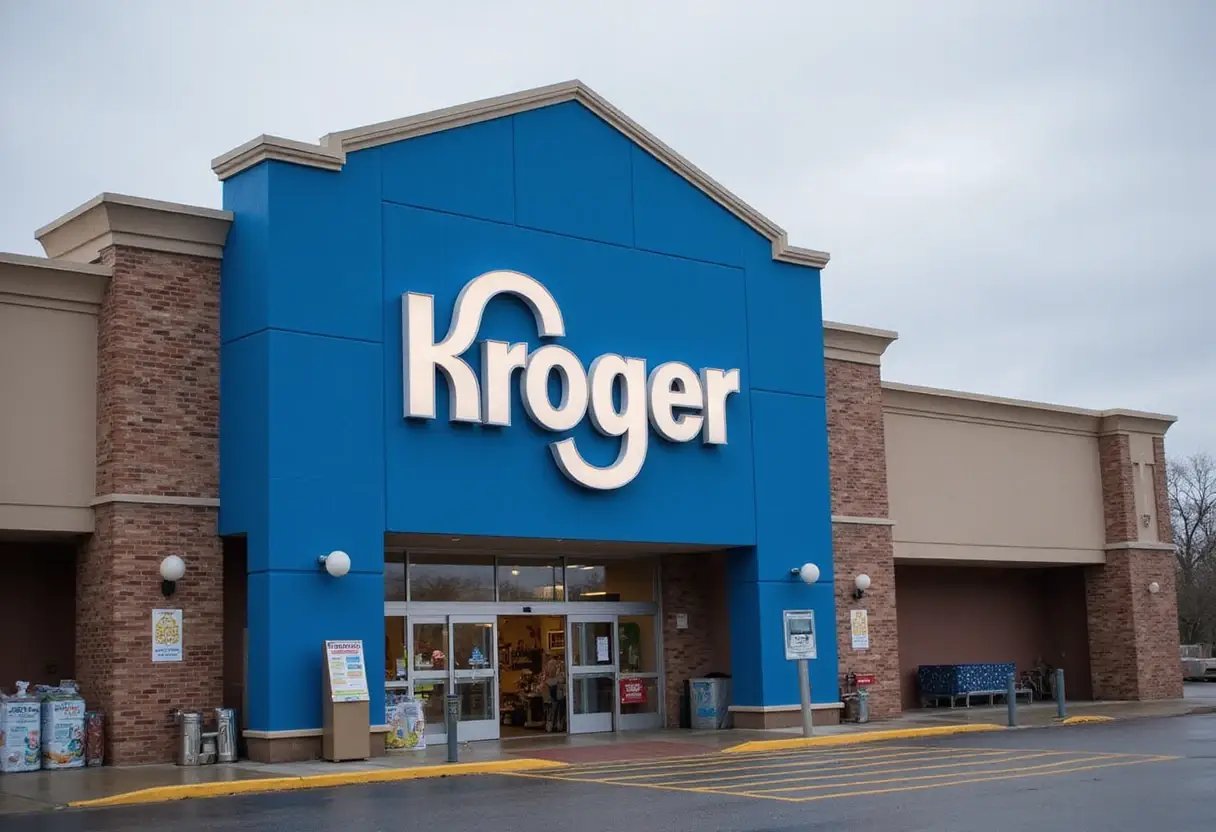
Kroger, the largest supermarket operator in the United States by revenue, has announced 3,000 layoffs, with the company explicitly tying the reductions to artificial intelligence and its stated intent to "reduce duplicative work." The figure is the headline number of the announcement; what sits beneath it — which roles, which sites, which timelines — remains, at this stage, undisclosed.
For workers in grocery retail, 3,000 positions is not an abstraction. It is 3,000 individual paychecks, concentrated in a single employer, announced in a single decision. Kroger has not yet said how the cuts distribute across corporate offices, store operations, distribution or technology functions, and that gap matters for anyone trying to read their own exposure.
What did Kroger actually announce?
The company confirmed 3,000 job cuts. It justified them, in its own words, as part of a plan to "reduce duplicative work" with AI.
That phrasing deserves scrutiny. "Duplicative work" is a corporate term of art, not a job classification. It can mean overlapping administrative functions across business units; it can mean back-office processes a model now performs; it can mean a rationale broad enough to cover cuts made for cost reasons alone. Kroger's statement, as reported, does not distinguish between these readings.
What the announcement also does not contain:
- No breakdown of the 3,000 roles by function or seniority.
- No store-closure or site-closure list.
- No timeline for when notices will be issued.
- No severance terms stated publicly at announcement.
- No quantified claim of cost savings or efficiency gains.
Each of these omissions is a data point in itself. An announcement that names a total but withholds composition invites the reader to assume the worst-case distribution — and gives the company room to revise.
Is this an AI story or a cost story?
The honest answer is that the announcement does not settle it. Kroger has chosen to attach the words "with AI" to a layoff decision, and that choice is itself informative. Companies describe cuts as technology-driven when they want the reduction read as modernization rather than distress. The same cuts described as "operational restructuring" would read differently to investors, employees and regulators.
Three thousand positions at a company of Kroger's scale — it operates thousands of stores across the United States — represents a small fraction of its total workforce. The macro effect on national retail employment will be minor. The signal effect is not: when the largest player in a sector names AI in a layoff announcement, competitors, suppliers and workers in adjacent roles all price that signal into their own plans.
For an individual worker, the practical translation is narrow but real. If you hold an administrative, reconciliation or reporting role in grocery retail — the kind of work most plausibly described as "duplicative" — the relevant fact is that the sector's largest employer has now put that category of work on record as reducible. If you hold a customer-facing, logistics or perishables role, the announcement gives no evidence of direct exposure, and it would be inaccurate to read it as such.
What is not yet known
The announcement leaves the burden of verification with everyone except Kroger. Watch for three things in the follow-up coverage: state WARN notices, which will convert the 3,000 figure into named locations and dates; any statement on severance and reassignment; and whether the company quantifies the AI claim with specifics — which tasks, which systems, measured how — or lets it stand as rhetoric. On current evidence, it stands as rhetoric.
Kroger's cuts are a genuine labor-market event for the 3,000 people affected, and an unverified thesis about AI for everyone else. The next disclosures will determine which.
Source: Google News: Layoffs
More from Sophie Lindqvist
Show full bio
Staff writer covering regulation, policy and their impact on Job market data and labor economics at Path & Pay.
503 articles