Kroger to Cut 3,000 Corporate Jobs Over Three Years
Kroger will cut 3,000 corporate jobs over three years, explicitly tying the reduction to AI adoption while leaving store-level staff in place.
Updated
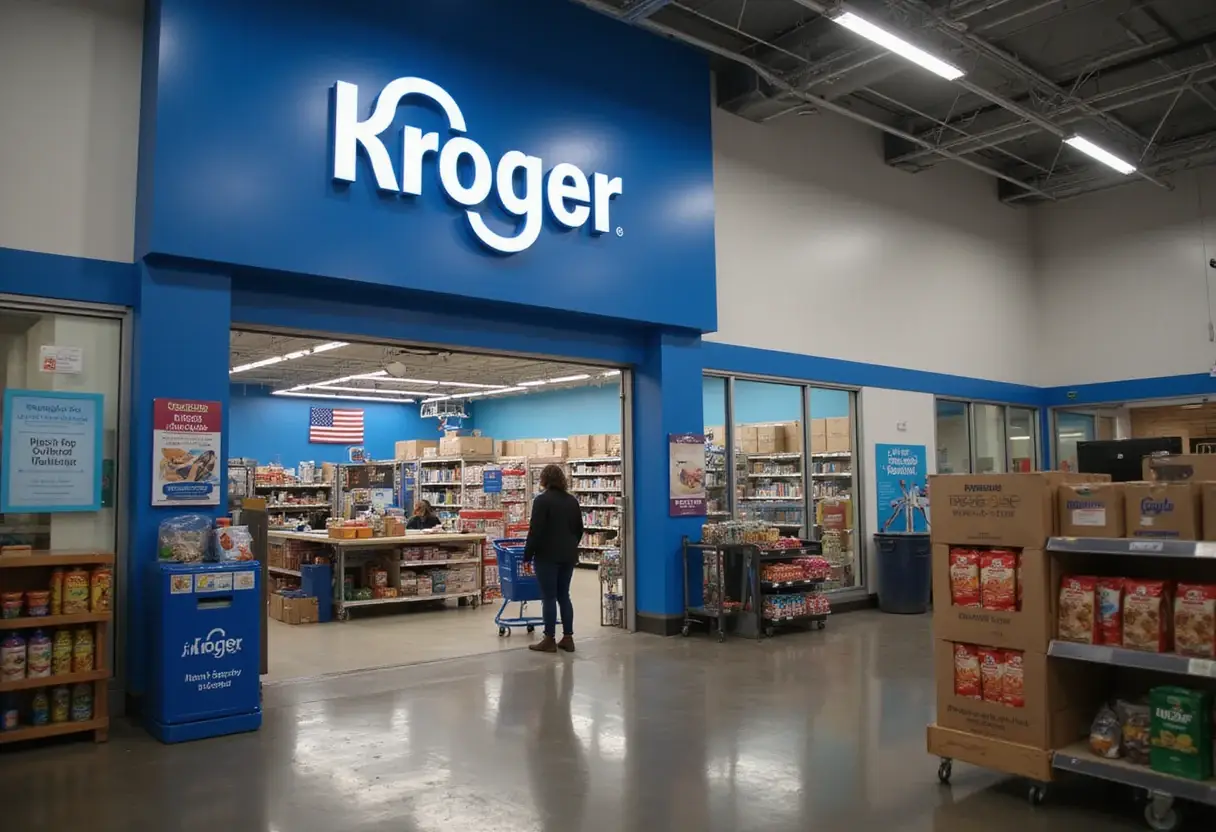
Kroger plans to lay off 3,000 corporate employees across three years, the largest announced white-collar reduction in US grocery retail this year. The cuts hit desk roles, not the roughly 400,000 workers who staff its supermarket shelves.
The retailer says the decision follows its push into artificial intelligence. Kroger is leaning on automation and AI tools to handle work that corporate teams once did — planning, analysis, back-office processing. The three-year timeline signals a phased restructuring rather than a single severance wave.
What does this change for corporate retail workers?
The move matters because it marks where AI-driven cuts are landing first. Grocery chains run thin margins on labor. Store-level staff remain essential to operations. Corporate functions — finance, merchandising support, administration — are the easier targets for automation. That split is now visible in the numbers: 3,000 office jobs eliminated, store jobs untouched.
For an individual mid-level analyst or coordinator at a large retailer, the market signal is direct. Employers are consolidating corporate headcount while protecting customer-facing roles. Skills that pair retail domain knowledge with AI tooling carry more weight than skills tied to manual reporting or routine coordination. A worker in one of these roles now faces a three-year window to reskill internally or reposition externally, not an abrupt exit.
How the national picture compares
Kroger's announcement fits a broader pattern in US white-collar employment. Large employers across retail, technology and finance have trimmed corporate staff while preserving frontline operations since 2023. Few have framed the cuts so explicitly around AI adoption. Kroger's public positioning makes it a test case other grocers will watch.
The scale deserves context. Three thousand corporate positions represent a small fraction of Kroger's total workforce. But for the corporate labor market, it is a meaningful data point: it shows AI-linked restructuring reaching an industry long considered automation-resistant at its core. If peer chains such as Albertsons follow, the affected talent pool could grow well beyond one company's offices.
The three-year pace also matters. Phased reductions let workers see the trend early and act on it. Unlike a surprise layoff notice, this timeline gives affected employees quarters, not weeks, to plan a move into adjacent roles in supply chain, vendor management or analytics-adjacent positions where demand remains steady.
Kroger has not detailed which corporate departments will shed the most jobs, nor how severance will be structured. Those specifics will shape how sharply the cuts hit individual workers and local labor markets around its Cincinnati headquarters and regional offices. Further announcements over the coming quarters should clarify whether AI adoption expands or narrows the company's total employment by the end of the restructuring.
Source: Google News: Layoffs
More from Priya Raman
Show full bio
Market editor covering people, launches and day-to-day practice in Job market data and labor economics at Path & Pay.
535 articles
Go deeper
- Kroger to Cut 3,000 Corporate Jobs Over Three Years Amid AI Push
- Kroger to Cut 3,000 Corporate Jobs Over Three Years in AI Push
- Kroger to Cut 3,000 Jobs as AI Takes on 'Duplicative Work'
- Kroger Cuts 3,000 Corporate Roles Over Three Years in AI Pivot
- Kroger to Cut 3,000 Corporate Roles Over Three Years, Citing AI