Offshore Wind Push Delivers Jobs Boost for UK Castings Sector
A new report finds the UK's offshore wind build-out is driving a jobs boost in castings and forgings, strengthening demand for skilled foundry and forging workers.
Updated
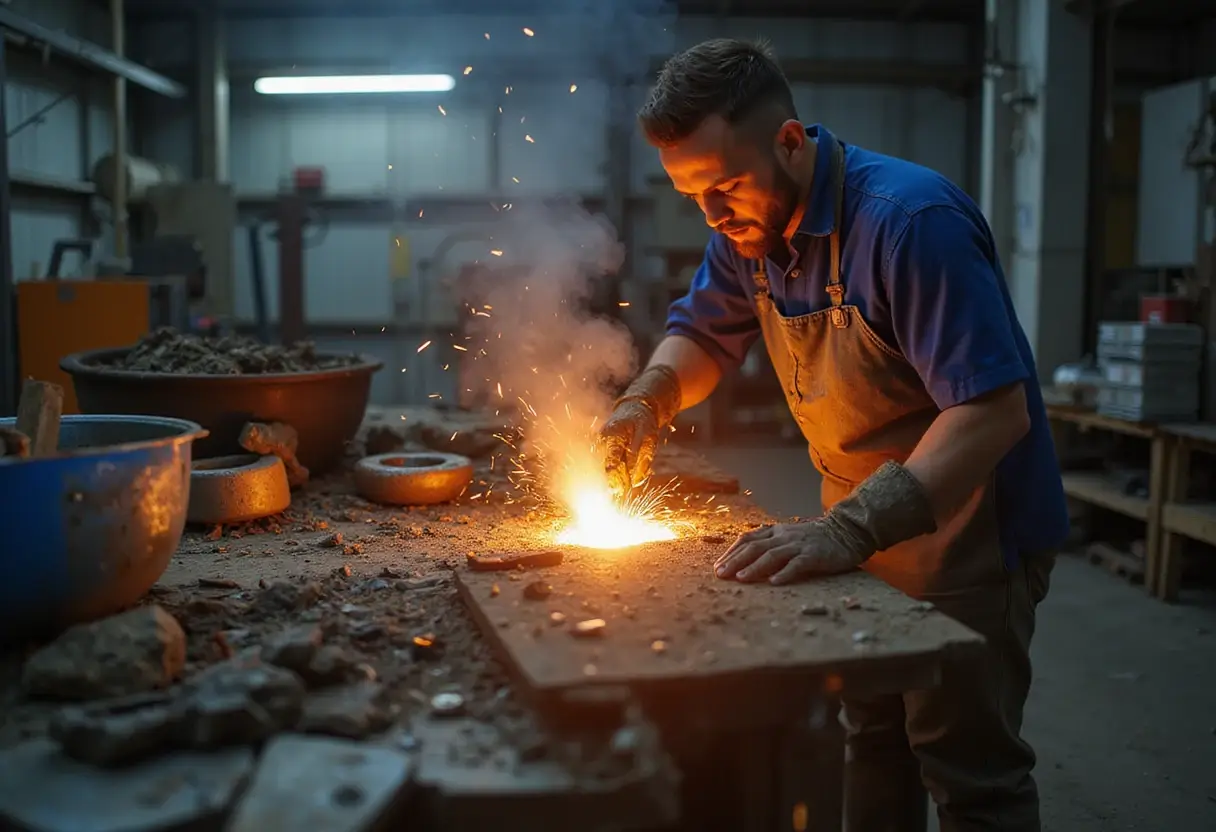
A new report has identified a jobs boost for the UK castings and forgings industry, driven directly by the country's offshore wind build-out.
The finding, covered by Production Engineering Solutions, lands at a moment when heavy manufacturing in Britain has spent years shedding capacity rather than adding it. Against that backdrop, a report that points to hiring growth — rather than closure risk — in foundries and forging plants is the rare piece of good news for skilled trades in this niche.
Which jobs are we talking about?
Castings and forgings sit near the bottom of the offshore wind supply chain, but they're structural to it. Turbine towers, foundations, flanges, shafts and transmission components all depend on cast or forged metal parts. As the UK pushes to expand its offshore wind fleet, demand for those components pulls hiring through the foundries and forges that make them.
For workers, the significance is straightforward. These are skilled production roles — moulders, melt operators, machinists, metallurgists, quality engineers — concentrated in industrial regions where comparable manufacturing jobs have been scarce.
The takeaway: renewable energy investment is now showing up as concrete demand for metal-forming labour, not just white-collar project roles.
What does this mean for individual jobseekers?
If you're already in castings or forgings, the report suggests your market position is strengthening rather than weakening — an unusual position for this sector over the past two decades.
If you're adjacent — general machining, welding, foundry supply, materials inspection — the offshore wind pipeline gives you a credible second employer base beyond automotive and general engineering, sectors that have been cutting rather than growing.
The report's framing matters for career planning too: energy-transition hiring is often discussed as if it only benefits software, electrical and project-management roles. This finding corrects that picture for the heavy-industry side of the workforce.
In plain terms: the green build-out has reached the foundry floor, and it's hiring.
What comes next?
How durable the boost proves depends on whether turbine component orders continue flowing to UK plants rather than overseas suppliers — the question the report's authors, and everyone working in the sector, will be watching as the next rounds of offshore wind projects are contracted.
Source: Google News: Jobs report
More from Grace Kim
Show full bio
Correspondent covering money, funding and market shifts around Job market data and labor economics at Path & Pay.
503 articles