Trump Extends $100,000 H-1B Fee and Ties Approvals to Layoffs
Trump extended the $100,000 H-1B fee for 12 months effective September 21, 2026, and ordered agencies to weigh employer layoffs in H-1B reviews, even as courts leave the fee unenforced.
Updated
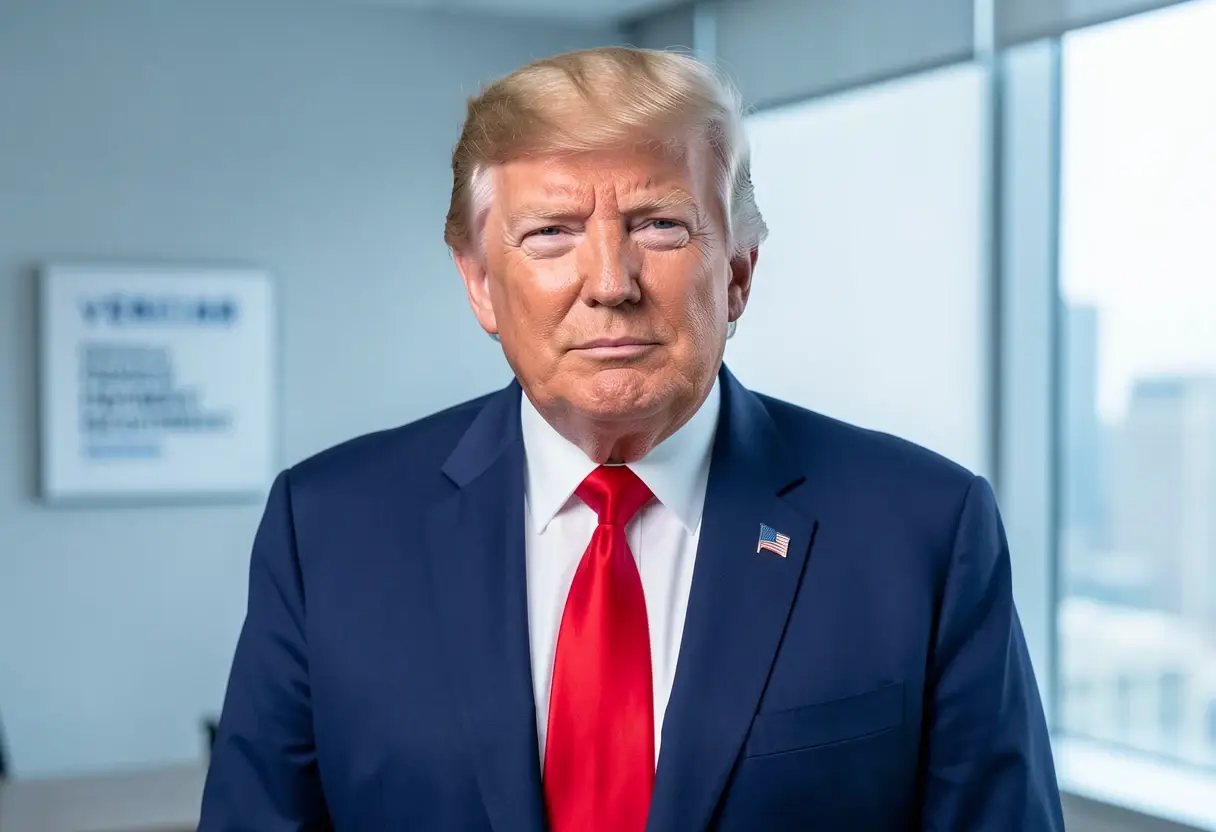
President Trump extended the $100,000 H-1B fee for another 12 months on September 18, 2026, and paired the renewal with a new Executive Order that directs agencies to weigh an employer's recent layoffs when reviewing its H-1B petitions. The fee extension takes effect at 12:01 a.m. Eastern time on September 21, 2026, just as the original one-year restriction was set to expire. It is scheduled to remain in effect for 12 months, absent another extension, modification, or court action.
What does the renewed proclamation require?
The core requirement is unchanged from the original September 2025 proclamation: entry into the U.S. as an H-1B specialty occupation worker is restricted unless the petition is accompanied or supplemented by a $100,000 payment. The proclamation generally targets petitions involving beneficiaries outside the United States who must seek admission to activate approval, through consular processing, port-of-entry admission, or pre-flight inspection.
Employers must obtain and retain documentation of payment before filing, and the State Department is directed to verify payment before approving the visa. The Secretary of Homeland Security retains discretion to exempt an individual worker, an entire company, or an entire industry if doing so serves the national interest and does not threaten U.S. security or welfare.
The White House cites steep drops in H-1B filings by large IT staffing and outsourcing firms as evidence the original restriction worked, along with a shift toward higher-paid, higher-skilled registrants in the FY 2027 cap season. Those figures come from the administration's own account of the policy's effects and should be read with that in mind.
Where do the courts stand on the fee?
The renewal does not arrive on settled legal ground. A coalition of 20 state attorneys general sued in Massachusetts as State of California v. Mullin, and on June 8, 2026, Judge Leo Sorokin vacated the policy, calling it an unlawful tax. A separate D.C. lawsuit brought by the U.S. Chamber of Commerce and the Association of American Universities went the other way, upholding the fee. Both rulings are on appeal. On July 24, 2026, the First Circuit denied the government's request to pause the Massachusetts vacatur while its appeal moves forward.
USCIS currently states it disagrees with the ruling but will comply with it while considering next steps, meaning the fee is not being collected as a formal matter. In practice, reports from employers and immigration practitioners suggest adjudication has not been consistent under that posture: some petitions filed without the $100,000 payment move forward normally, while others face delays. Because the renewed proclamation is a newly issued presidential action rather than a continuation of the vacated one, its relationship to the existing rulings will likely require further legal analysis and may generate additional litigation.
How do layoffs now affect H-1B petitions?
The second action signed September 18 — an Executive Order on program integrity and interagency coordination — attaches no new dollar figure. Instead, it changes how petitions are evaluated behind the scenes.
- The Secretaries of State, Labor, and Homeland Security must consult with the Secretaries of Commerce and Education, along with the Small Business Administration, to gather data on wages, industry conditions, and employment specialization.
- Those three agencies must also factor in a petitioning employer's recent or planned layoffs of similarly situated U.S. workers when reviewing H-1B applications.
That layoff scrutiny stands on its own. An employer that has recently cut its U.S. workforce in a role comparable to the one it is sponsoring may now face closer examination of its petitions specifically because of that layoff history, separate from anything involving the $100,000 fee.
For individual workers, this translates directly into longer odds at employers with recent restructuring: petitions from those companies are more likely to draw examination, on top of the fee and litigation uncertainty already shaping filing decisions.
Does this interact with the proposed $103,265 fee?
The proclamation is entirely separate from the proposed $103,265 DHS regulatory fee on cap-subject H-1B petitions, which remains only a proposal. Its public comment period closes September 24, 2026, and it would still need to be finalized before taking effect. If finalized as drafted, some employers could owe both the $100,000 payment and the $103,265 fee on the same case.
Employers with H-1B workers outside the United States, or with petitions requiring consular processing, should confirm now whether the payment applies and build it into filing timelines and budgets. Employers that have recently conducted or are planning layoffs should expect those decisions to draw closer scrutiny on petitions for comparable roles. Given how quickly this area has moved between vacated, reinstated, and now renewed, both actions should be treated as provisional pending the pending appeals and any new litigation.
Original: theindianpanorama.news
More from Grace Kim
Show full bio
Correspondent covering money, funding and market shifts around Job market data and labor economics at Path & Pay.
503 articles
Go deeper
- White House H-1B Order Puts Employer Layoffs Under Microscope
- White House H-1B Order Puts Employer Layoffs Under Microscope
- Trump Tells H-1B Employers to Stop Laying Off American Workers
- H-1B Fees Rise as Rules Tighten and Layoffs Draw Scrutiny
- Trump and Vance Tell H-1B Sponsors: Stop Cutting US Workers