Without local transit, Italy faces a €26.2bn annual economic loss
An Agens study estimates that removing local public transport would cut Italian productivity by 1.2%, cost €26.2bn annually and leave 15,000 Milan workers unable to reach work.
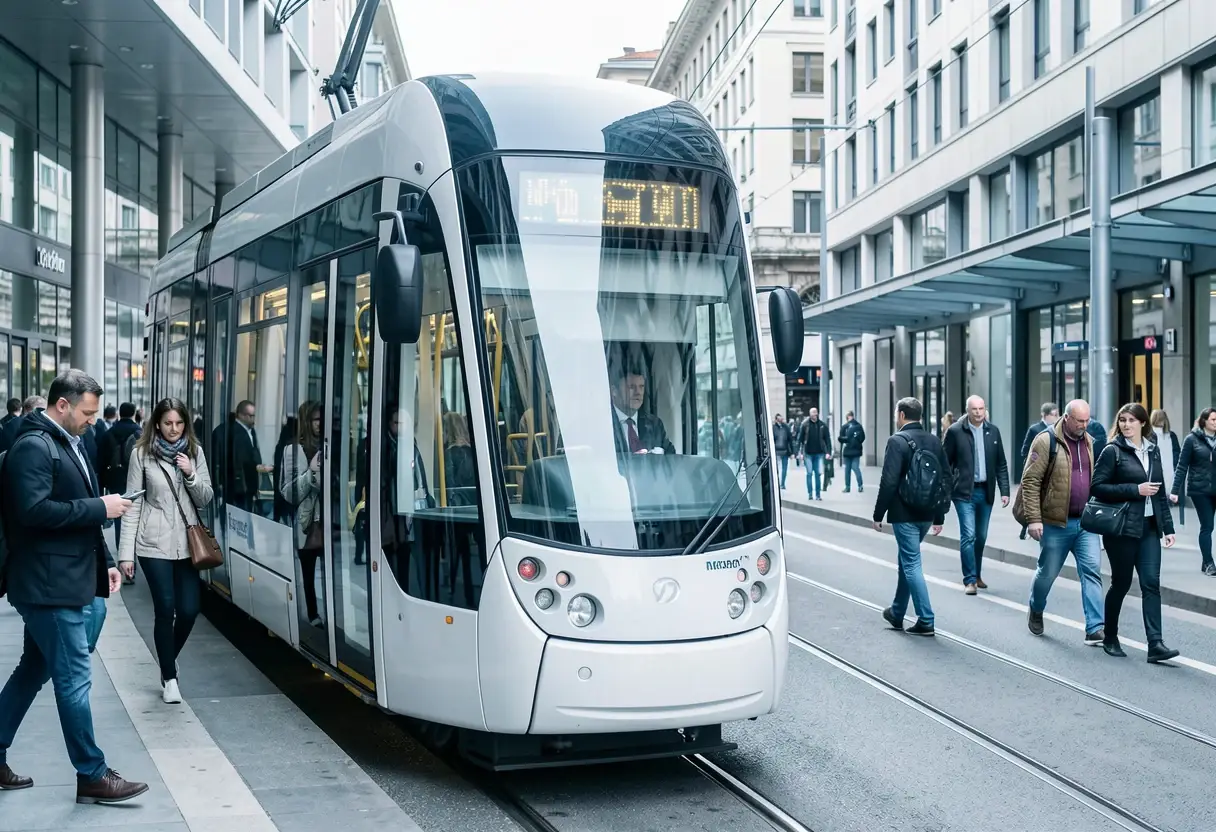
An Agens study estimates that removing Italy’s comprehensive local public transport network would cut national productivity by 1.2% and cost the economy €26.2 billion each year.
Major urban areas would face the steeper estimate of 3.1%. Agens, the Confederation of Transport and Services, is a member of Confindustria. The Politecnico di Milano carried out the research, presented in Rome.
What does this change for workers and employers?
The estimate becomes concrete in a simulation of the Milan metropolitan area, described in the study as one of Italy’s main economic engines. During the morning rush hour alone, around 54,000 journeys would be completely cancelled because alternatives were lacking. Of those journeys, 15,000 belonged to workers unable to reach their workplace.
The network at issue includes buses, trams, the underground and trains.
Nationwide, the “Tpl-down” scenario models either no public transport or drastic service reductions. It would reduce accessibility to workplaces by 26% on average. In high-density urban areas, the decline would reach 70% to 80%.
For an individual worker, that narrows the practical set of reachable jobs. For employers, it reduces the pool of workers and skills available to businesses.
Across both the national and Milan scenarios, the mechanism is consistent: fewer transport options shrink the practical radius around each home and workplace, which then changes access to jobs, competition for skills and business productivity.
The research also estimates that private transport would incur €9.6 billion in collective costs without public transport.
Agens and Politecnico di Milano state: “Without a comprehensive public transport network, the production system would suffer a severe collapse in terms of competitiveness and efficiency.”
The practical answer is straightforward: transport policy can determine job access even when no job advert or contract mentions a bus route or train station.
The sector’s direct economic contribution
More than 800 local public transport companies carry around 5 billion passengers a year. The study estimates that they generate €4.6 billion in direct added value annually.
Their annual funding base totals €12.1 billion. The reported breakdown assigns 70%, or €8.4 billion, to public funds and 29%, or €3.5 billion, to ticket and season-ticket sales. The sector spends €7.5 billion each year on goods and services, including fuel, electricity and maintenance. Subtracting those operating costs produces the €4.6 billion direct value estimate.
The study also counters the perception that local public transport drains public finances. Its estimates depict a business that recirculates substantial demand through Italy’s supplier base.
That distinction matters because the €12.1 billion gross flow is not the same as economic value: operating purchases reduce direct contribution, while the same spending supports demand elsewhere.
How suppliers extend the impact
Vehicles, spare parts, fuel and technology purchases from other companies create an estimated €3.6 billion to €7.8 billion in indirect added value each year. Combining direct and supply-chain effects yields €8.2 billion to €12.4 billion annually, equal to roughly 0.4% to 0.6% of Italian GDP.
Agens and Politecnico di Milano put the multiplier this way: “every euro of added value produced directly by public transport generates between 0.79 and 1.69 additional euros for other businesses in the country.”
The sector estimate covers more than 800 companies, and the research includes a Milan metropolitan simulation alongside national estimates. The summary does not state the study year, a formal survey sample or a revision schedule.
That distinction matters for interpretation. The sector totals describe annual flows, while the removals and workplace-access changes are modeled scenarios. They do not represent observed layoffs or job losses.
What the models imply for future decisions
Future decisions over routes, frequencies and service cuts can alter labour-market access before they appear in output or hiring data. If transit disappears or contracts sharply, workers lose feasible job choices and employers lose access to available workers. If cities preserve comprehensive networks, the study suggests they protect both productivity and a wider employment market.
As future service reductions are debated, the Agens figures make commuting access a measure of economic exposure, not merely a transport issue.
Source: Google News: Labor market
More from Priya Raman
Show full bio
Market editor covering people, launches and day-to-day practice in Job market data and labor economics at Path & Pay.
606 articles
Go deeper
- Driverless Cars Threaten Jobs and Local Economies, New Report Finds
- Driverless Taxis Raise Job and Congestion Risks, Report Finds
- US commute times hit 27.4 minutes as RTO pushes workers back on the road
- Remote Work Reshapes UK Jobs for Disabled and Older Workers
- The 47% AI Job-Loss Number Was Never a Forecast — Real Risk Is 9%